
1 to 3 a.m.
6 to 9 p.m.
in the example home
EV homes
Cars that are ready by morning, charged in the cheapest hours, with one or two EVs in the driveway.
- 1 a.m. to 3 a.m. car charges off-peak
- 6 p.m. to 9 p.m. plugged in and waiting
- You send
- Vehicles, charger and amps, daily miles and departure times
- You get
- A charging window per day type and the cost difference
- Stays with you
- Ready-by times, minimum charge and overrides
- Limits
- Control depends on what the charger or car allows
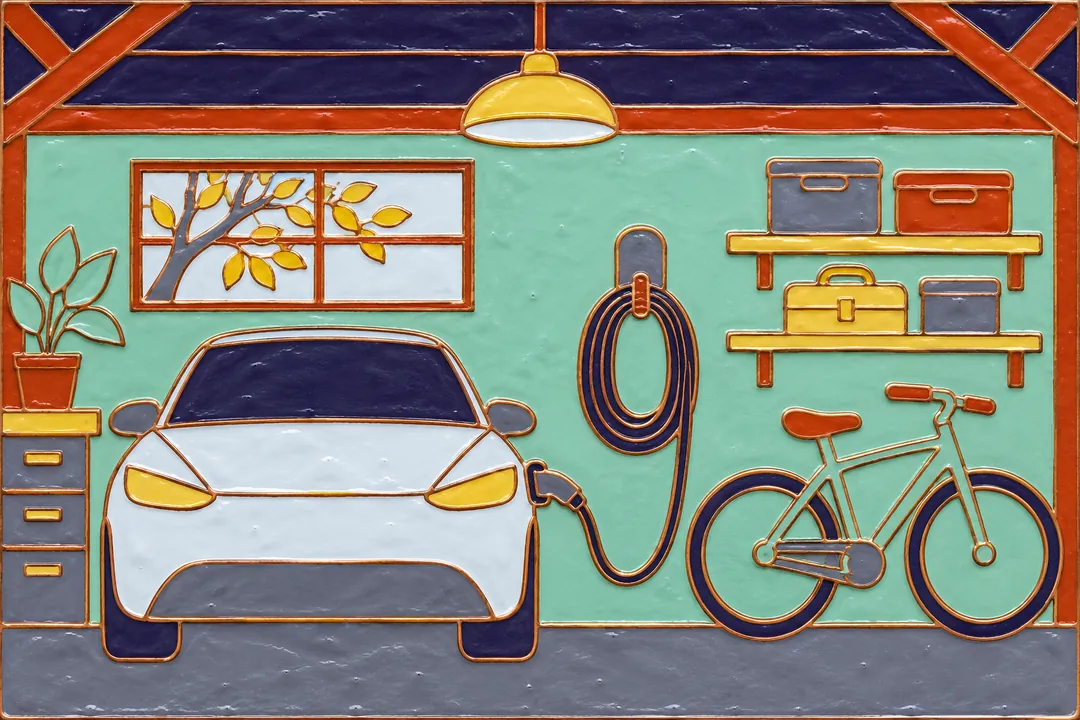
An electric car is often the largest single load in a house. A car driven 35 miles a day at 3.5 miles per kWh needs about 11 kWh from the wall once charging losses are counted, every day. When that energy is bought matters more than almost anything else on the bill. It is also the easiest load to move: the car often sits parked for twelve hours or more overnight, and it only needs to be ready by the time you leave.
Ready-by charging
DOE notes that most EV drivers charge overnight at home, on Level 1 or Level 2 equipment. The simplest setting, charging as soon as the car is plugged in, puts the session at the start of the evening, which on many time-of-use rates is the most expensive part of the day. Ready-by charging works backward instead. You set the time you leave and the charge you need, and the schedule picks the cheapest hours that still finish in time.
Culni builds that window from your rate for each day type, so a weekend is handled differently from a weekday. Where the rate’s windows move with the seasons, as LG&E and KU’s time-of-day windows do, the charging window moves with them. If the home has a battery, the schedule also keeps the battery from emptying into the car at the start of the peak, which would leave the house buying peak-price energy later that evening. EV charging explains how the window is chosen, and your plan lists how to override it for an unplanned trip.
Level 1 or Level 2
Level 1 charges from a standard 120 V outlet. DOE estimates about 5 miles of range per hour, assuming 1.9 kW. Level 2 uses 240 V at home, and DOE notes that most residential Level 2 chargers run at up to 30 amps, delivering 7.2 kW, or about 25 miles of range per hour.
Level 2 is not always needed. What matters is whether the energy you need each day fits inside the cheap window. About 11 kWh takes roughly six hours on Level 1, which a ten-hour overnight window can hold. Two cars, a long commute or a short off-peak window usually call for Level 2. The EV charging time calculator works this out for your car, and the EV charger installation checklist covers what to settle with an electrician first. Culni does not sell or install chargers.
Two cars
With two cars, each gets its own ready-by time and its own daily need. If they share one charger, the car that leaves first charges first. If each has its own charger, the schedule can stagger them so both are not drawing full power in the same hour. Panel capacity and any load management hardware remain your electrician’s decision.
Example (fictional). Take the example car on its own, leaving the home’s solar and battery out of it: 35 miles a day at 3.5 miles per kWh with a 10% charging loss, so 11.1 kWh from the wall. It is plugged in at 6 p.m. and leaves at 7:30 a.m. The example rate charges 31 cents from 4 to 9 p.m. and 8 cents from 9 p.m. to 7 a.m.
| Charging pattern | When it charges | Cost for the day |
|---|---|---|
| Level 2 (7.2 kW), on arrival | 6 p.m. to about 7:30 p.m., all at the peak price | $3.44 |
| Level 1 (1.9 kW), on arrival | 6 p.m. to about 11:50 p.m., 5.7 kWh at the peak price | $2.20 |
| Either charger, ready-by schedule | Inside 9 p.m. to 7 a.m., all off-peak | $0.89 |
A second car driving 20 miles a day would add about 6.3 kWh, or $0.51 off-peak. On the one Level 2 charger, both cars would finish in under two and a half hours. Assumptions: the same 10% loss on both chargers, fixed charges left out, one weekday only. Weekends, winter and your real rate change the numbers.
Managed charging programs
Some utilities pay drivers to let them shift or pause charging during grid events. LG&E and KU’s Optimized EV Charging program, for example, pays “$25 plus an additional $5 monthly participation incentive” and allows “up to 10 demand response events during the year”. Culni is not affiliated with LG&E, KU or any program and cannot enroll you. If you join one, the program’s control takes priority on event days, and your plan notes what Culni does on those days and what it leaves to the program.
If you are buying a car or a charger now, the federal credits for new clean vehicles (30D) and home charging equipment (30C) have ended. Planning a system lists the IRS dates.
What you send and what you get
Send each vehicle’s make and model, the charger (Level 1 or Level 2, and its amps), typical daily miles and departure times for weekdays and weekends, and your rate plan with a recent bill. Control can run through the charger, through the vehicle, or neither, and device connection is confirmed home by home, as the devices page explains. Where nothing can connect, the plan gives you the timer setting to enter yourself.
You get a charging window for each day type, the control path for each car and charger, and the estimated cost difference with every assumption shown. The EV charging cost calculator gives a first estimate while you gather the rest.
TodayYour turn
Send your rate and your devices
Your utility and rate plan, one recent bill and the devices you have or plan. We reply with a written home energy plan: your rate decoded, which devices can connect, the daily schedule and its estimated value with every assumption shown.
Remote. No site visit needed.